Septic-to-Sewer Conversion in Sarasota County: The 2026 Picture
Sarasota County's septic-to-sewer conversion program is moving, Florida's 2030 deadline is approaching, and the details, vacuum sewers, plant upgrades, neighborhood timelines, matter for homeowners planning ahead.
Where Sarasota County Stands Right Now
Sarasota County is mid-program on one of the largest septic-to-sewer conversions in Florida, and 2026 sits squarely between the planning years and the deadlines. The county has committed to eliminating vulnerable septic systems in priority areas, Florida's statewide 2030 septic deadline is now close enough to plan around, and the infrastructure that makes conversion possible, treatment plants, sewer mains, pump stations, is being built and upgraded in phases. For homeowners, this is the year to learn your parcel's position in the sequence.
The stakes are environmental as well as practical. Septic drainfields in Sarasota County contend with a seasonally high water table of 0 to 3.5 feet, in many areas the drainfield sits in or near groundwater for much of the rainy season, which is exactly when a drainfield needs dry soil to function. Aging systems in the high-water-table zone are a known source of nutrient pollution to Sarasota Bay, Phillippi Creek, and the county's waterways. Conversion to central sewer is the county's answer, and the program is sequenced neighborhood by neighborhood.
What the 2030 Deadline Actually Requires
Florida's 2030 septic deadline requires vulnerable septic systems to connect to available central sewer or upgrade to enhanced nutrient-reducing treatment. In practical terms, if a sewer main is available at your street, connection is the expectation. For Sarasota County homeowners, the deadline makes the county's conversion schedule your personal schedule, your parcel is either already served, scheduled, or on the list to be scheduled. The worst outcome is learning your timeline only when the deadline arrives.
The Bee Ridge Plant Upgrade: 12 to 18 MGD
Conversion programs stand or fall on treatment capacity, connecting thousands of homes to sewer means nothing if the plant cannot treat the flow. Sarasota County's Bee Ridge water reclamation facility is being upgraded from 12 to 18 million gallons per day of advanced treatment, a 50 percent capacity increase that anchors the county's conversion program for the surrounding areas.
Why should a homeowner care about plant capacity? Because treatment capacity is the hidden constraint on conversion sequencing. Neighborhoods convert when mains reach them and when the downstream plant can take the flow. The Bee Ridge upgrade is the kind of project that unblocks whole corridors of the county's program, it is the reason areas around Bee Ridge can be scheduled with confidence. If your neighborhood's conversion timing ever seemed arbitrary, treatment capacity sequencing is often the explanation.
Advanced Treatment and the Bay
The Bee Ridge upgrade is to advanced treatment standards, which matters for where the treated water goes. Sarasota County reclaims treated water for irrigation, reducing demand on the aquifer, and advanced treatment protects the bay and creeks from nutrient discharge. Homeowners who convert are not just complying with a mandate; they are plugging into infrastructure built to protect the water bodies that define the county.
Venice Gardens: Expansion Slipped to Around 2029
Venice Gardens, one of the conversion program's priority areas, has seen its expansion timeline slip to around 2029. For homeowners in Venice Gardens and the surrounding Venice area, that date is the planning anchor: the difference between a conversion this year and a conversion in three years changes what you do about an aging drainfield today.
The practical question for Venice-area homeowners on septic is what to do in the interim. A drainfield that is failing now cannot always wait until 2029, and rebuilding a system the county main will replace is money that does not come back. The sensible middle path: maintain what you have, avoid major septic investments, and keep your parcel's schedule on file. If your private lateral, the pipe from your house to the septic tank, is in poor shape, repairing it now is still worthwhile, because that same pipe will likely serve your connection to the sewer main later. Our septic-to-sewer conversion service evaluates the private-side plumbing that homeowners control.
North Port Phase 1: Residential Conversions by 2031
North Port's conversion program phases residential connections with phase 1 targeting completion by 2031. North Port is one of the fastest-growing parts of the county, and much of its housing stock sits on septic in areas with the county's signature high water table. Phase 1 by 2031 gives North Port homeowners a firm horizon, but it also means the years between now and then are a planning period, not a waiting period.
If you own in North Port on septic, the questions to answer now are the same as in Venice Gardens: is my drainfield healthy enough to last until my phase, and is my private lateral sound enough to connect when the main arrives? A sewer camera inspection of your lateral answers the second question definitively, and replacing a broken lateral as part of the conversion is far cheaper than discovering it is broken the week you try to connect. North Port's neighborhood page covers the area's pipe and soil conditions in more detail.
The Vacuum-Sewer Nuance: Englewood's 12,000+ AIRVAC Homes
Here is the technical wrinkle most conversion guides miss: roughly 12,000 or more homes in the Englewood area are served by AIRVAC vacuum sewer systems, and vacuum mains cannot be cut into the way gravity mains can. On a gravity sewer, a contractor taps the main at the street and connects your lateral, routine work. On a vacuum system, new connections require the vacuum network's equipment and sequencing; you cannot simply splice into a vacuum main the way you splice into a gravity line.
This matters for homeowners because conversion advice that assumes gravity sewers does not apply to vacuum-served parcels. Permits, connection methods, and even which contractors are equipped for the work differ. If your home is in the Englewood area and you are unsure whether you are on vacuum or gravity sewer, confirm it with the utility before planning a conversion project, the answer changes the entire approach.
Why Vacuum Systems Exist Here
Vacuum sewers are used where the terrain or water table makes deep gravity mains impractical, which describes much of coastal Sarasota County. A seasonally high water table at 0 to 3.5 feet makes trenching deep gravity mains expensive and difficult, and vacuum systems sidestep the problem by using pressure differential instead of gravity. They are an elegant solution to Sarasota's geology. They are just not a solution you can tap into casually.
What Homeowners Should Do in 2026
The conversion program rewards homeowners who plan ahead and punishes those who wait for a crisis. Here is the practical sequence for a Sarasota County homeowner on septic in 2026: first, learn your parcel's schedule from the county, whether you are served, scheduled, or unscheduled. Second, assess your current system's health; a failing drainfield has a different decision tree than a healthy one. Third, inspect your private lateral, because the pipe you own will be part of the connection regardless of who builds the main.
Fourth, resist the urge to pour money into a septic system in an area scheduled for conversion, but do not let a failing system sit, either. Temporary repairs that bridge you to your conversion date are the right economics. And fifth, when conversion reaches your street, treat the private-side work, the lateral connection, any needed pipe repair, the abandonment of the tank, as its own project with its own inspection. The county builds the main. Everything from the main to your house is yours.
Keep Your Paperwork With Your Parcel
One practical habit for the conversion years: keep a folder with your parcel's program notices, your conversion timeline, and any camera inspection footage of your lateral. Schedules slip. Venice Gardens moved to around 2029, and other phases will move too. Homeowners with their own records make better decisions when the county's timeline shifts, because they know exactly where they stand.
The Lateral Is the Overlooked Piece
County programs understandably focus on mains and plants. But the private lateral, your pipe from the house to the street, is where conversions stall. Corroded cast-iron laterals, bellied sections in saturated sand, and root-intruded clay joints are exactly the defects that make a new connection fail on day one. A camera inspection before your conversion date turns a surprise into a planned repair. Call (941) 344-0088 to have your lateral evaluated before the main arrives at your street.
Published 2026-10-09 · Sarasota Sewer Specialists
Related Sewer Services
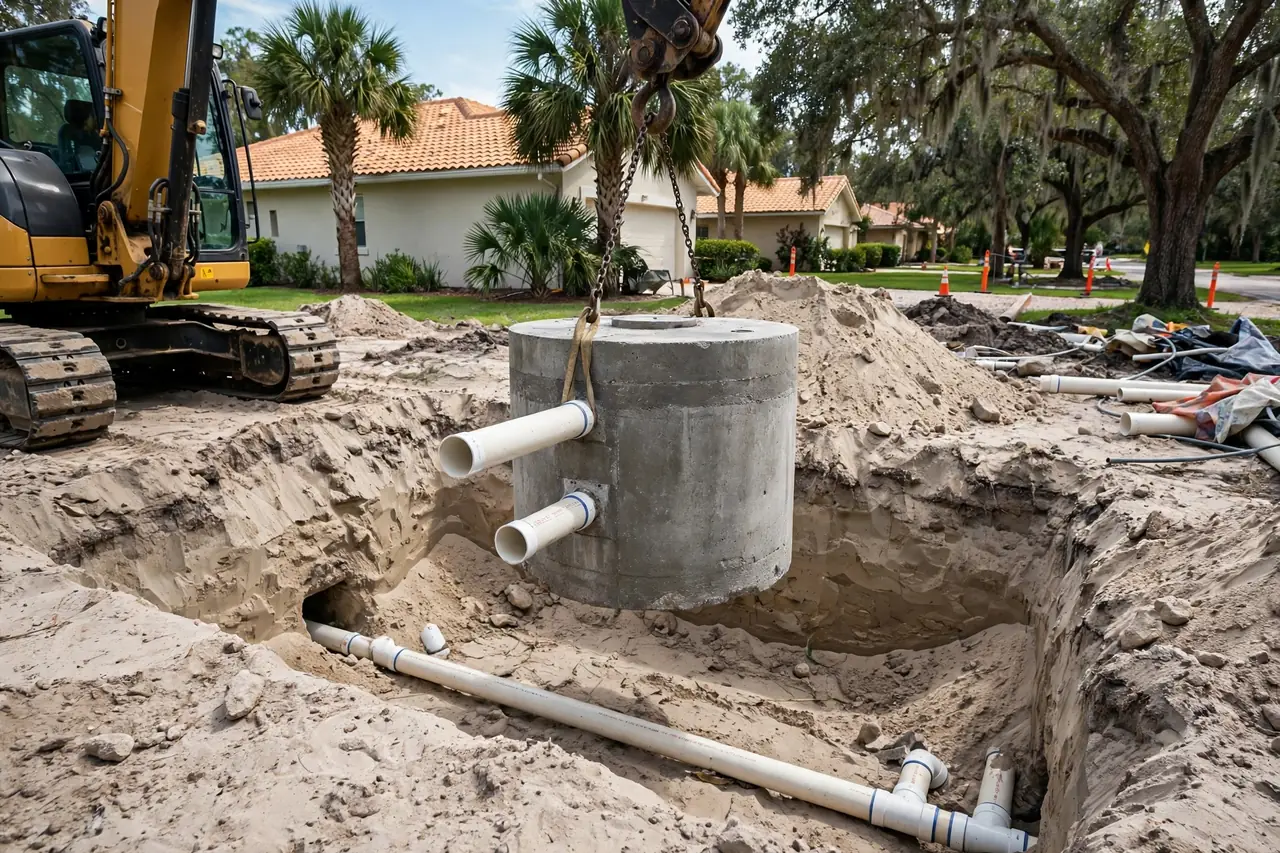
Septic-to-Sewer Conversion
Septic-to-sewer conversion in Sarasota County, FL. County program, timelines, and what owners must do. Call (9…
Learn more →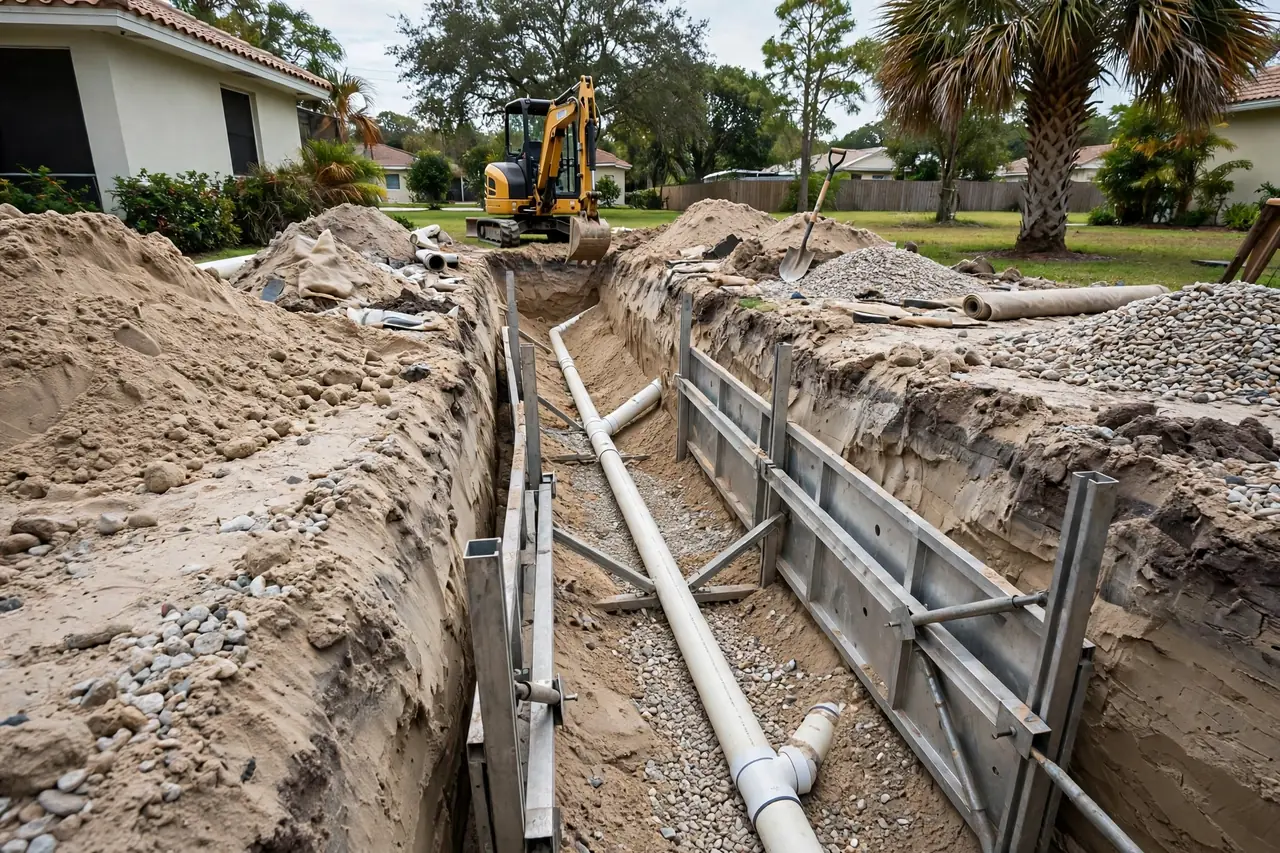
Sewer Line Replacement
Sewer line replacement in Sarasota, FL by excavation when trenchless won't work: proper grade, modern PVC pipe…
Learn more →Nearby Service Areas
Frequently Asked Questions
What does Florida's 2030 septic deadline mean for my home?
Florida's 2030 deadline requires certain septic systems to connect to central sewer where available or upgrade to enhanced treatment. In Sarasota County, the deadline accelerates the county's existing conversion program, areas like Venice Gardens and North Port are being sequenced to convert before 2030. Check with the county for your parcel's schedule, and talk to a contractor before the date arrives rather than after.
How do I know if my home is on a gravity or vacuum sewer network?
Most conversions tie the home into a gravity sewer main at the street, and the process is routine. But if your home is on an AIRVAC vacuum sewer network, common in parts of Englewood, the rules are different: vacuum mains cannot be cut into like gravity mains. Confirm which system serves your parcel before planning anything.
Should I convert now or wait for the county's program?
That depends on your parcel's schedule and your current system. Many homeowners convert as part of the county program when the main reaches their street; others replace a failing drainfield sooner. A camera inspection of your existing sewer lateral tells you whether your private pipe is sound enough to connect to the new main, or whether it needs replacement as part of the project.
My septic system is getting old. What should I do first?
Aging drainfields, the seasonally high water table, and repeated rainy-season backups are the practical triggers. If your system needs major work anyway, and your area is scheduled for conversion, it rarely makes sense to rebuild a drainfield that the county main will replace. Talk to the county about your timeline before investing in a septic system on its way out.