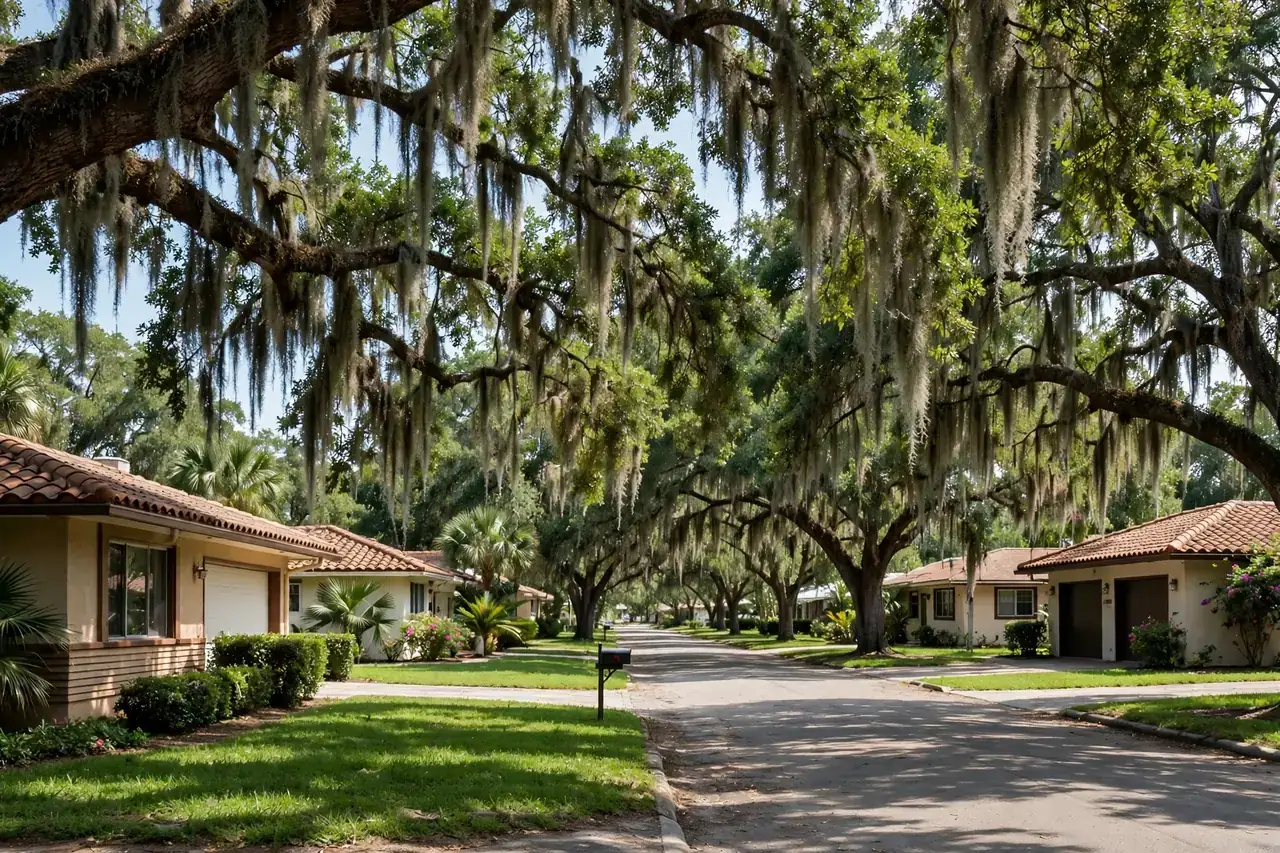
Sewer Line Repair in Gulf Gate, Sarasota, FL 34231
Gulf Gate is the archetypal 1960s to 70s Sarasota slab subdivision, and cast-iron drain lines under slab are Sarasota's prime failure cohort. We diagnose under-slab and lateral pipe with cameras and repair it without tearing your home apart.
The Prime Failure Cohort
Gulf Gate, off the South Tamiami Trail corridor in the 34231 ZIP, is one of Sarasota's most recognizable post-war subdivisions: streets of ranch and split-plan homes built in the 1960s and 1970s, each on a slab-on-grade foundation. That construction era and that foundation type define the neighborhood's sewer story. The homes were plumbed when cast-iron DWV was the standard for under-slab drain lines, and the buried laterals running from the houses to the street mains were cast iron or clay tile of the same vintage.
Why This Combination Fails
Cast iron has a predictable failure cycle, and Gulf Gate's homes are living at its end. Inside the pipe, decades of wastewater have corroded the wall and built up scale that narrows the bore; outside, the seasonally high water table and saturated Myakka fine sand work on joints and bedding. Under the slab, the pipe cannot be seen, so the failure announces itself indirectly, chronic slow drains, toilets that clog more often than they should, gurgling from fixtures, and the unmistakable smell of sewer gas finding its way up through dried or compromised traps. By the time the signs are obvious, the pipe has usually been deteriorating for years.
The Slab Complication
Under-slab pipe is the hardest kind to reach and therefore the easiest to ignore. But the slab does not protect the pipe, it only hides it. Saturated soil beneath and around the foundation settles and stresses joints exactly as it does in the yard, and the cast iron inside corrodes on the same schedule. The advantage of modern diagnosis is that the slab rarely has to come up blindly: a camera inspection shows exactly which runs are failing, so any concrete work is targeted to the damaged section rather than the whole floor.
Gulf Gate Elementary and the Neighborhood Grid
Gulf Gate's street grid was platted for the automobile era, curving drives, cul-de-sacs, and the elementary school that anchors the neighborhood's identity. The sewer mains follow that same grid, and the laterals are short runs from each home to the street. Short runs sound like good news, and they are: a Gulf Gate lateral is typically a straightforward camera survey and, if needed, a compact repair. But the era is the era, a short run of 1960s cast iron fails on the same schedule as a long one.
The South Tamiami Corridor Context
The neighborhood sits just east of the South Tamiami Trail commercial corridor, which means the surrounding infrastructure, mains, lift stations, and the collection system, has been maintained and upgraded around it for decades. The weak link is almost always the private lateral and the under-slab runs, which no municipal program touches. Homeowners are responsible for their lines from the house to the main, and in Gulf Gate those lines are now fifty to sixty years old.
Rainy Season and the Gulf Gate Lateral
From June through September, Sarasota receives roughly 60 percent of its 49 to 53 inches of annual rain, and the water table rises to within 0 to 3.5 feet of the surface across much of the county. For Gulf Gate's cast-iron and clay laterals, the rainy season is the annual stress test.
Infiltration Through Aged Joints
Groundwater pressing against a lateral with deteriorated joints infiltrates the pipe and adds volume the line cannot carry. In a Gulf Gate home this typically presents as drains that slow every summer and recover each winter, a pattern homeowners learn to live with until the summer the line does not recover. That progression is the joint failure advancing year by year. A camera inspection during the rainy season can show active infiltration, water visibly entering through joint gaps, which is the clearest possible evidence that the line needs rehabilitation, not another snaking.
Bellies in Sandy Soil
Myakka fine sand, Florida's state soil, underlies Gulf Gate as it does most of the county. When saturated through the rainy season, sandy backfill around the original trench loses compaction and the lateral settles unevenly, forming bellies where wastewater pools. A belly under the yard or the slab is a silent failure: flow slows, solids settle, and the restriction grows until backups begin. Camera inspection locates bellies by depth and footage mark, which is what allows a targeted repair instead of excavation by guesswork.
How We Repair Under-Slab and Lateral Lines
Every Gulf Gate job starts with a full camera survey, the under-slab drain lines via accessible cleanouts or pulled toilets, and the yard lateral to the city main. You watch the footage with our technician, so the diagnosis is visible, not asserted.
Trenchless Options for the Lateral
For the buried yard lateral, pipe bursting and pipe lining replace or rehabilitate the line through small access pits, leaving the driveway, landscaping, and the South Tamiami corridor curb appeal intact. Lining seals every joint at once, ideal for cast-iron and clay runs whose joints are the problem; bursting replaces pipe that has lost its shape.
Targeted Work Under the Slab
When the failing run is under the slab itself, the camera footage tells us exactly where. Concrete is opened only over the damaged section, a narrow, targeted trench, not the whole floor, and the new pipe is set, tested, and the slab restored. Many homeowners are surprised at how small the actual opening is compared to what they feared. Where the geometry allows, trenchless bursting from outside access points can replace under-slab runs without opening the floor at all.
Serving Gulf Gate and the 34231 Area
We serve Gulf Gate's full street grid and the surrounding 34231 neighborhoods along the South Tamiami corridor. If your home was built in the 1960s or 1970s on a slab and the sewer line has never been camera-inspected, the inspection is overdue, the pipe is on the same schedule as every other cast-iron line of its generation, and the footage will tell you exactly where yours stands.
Call (941) 344-0088 to schedule a camera inspection for your Gulf Gate home.
Sewer Services in Gulf Gate
Full-service sewer line care for Gulf Gate homes.
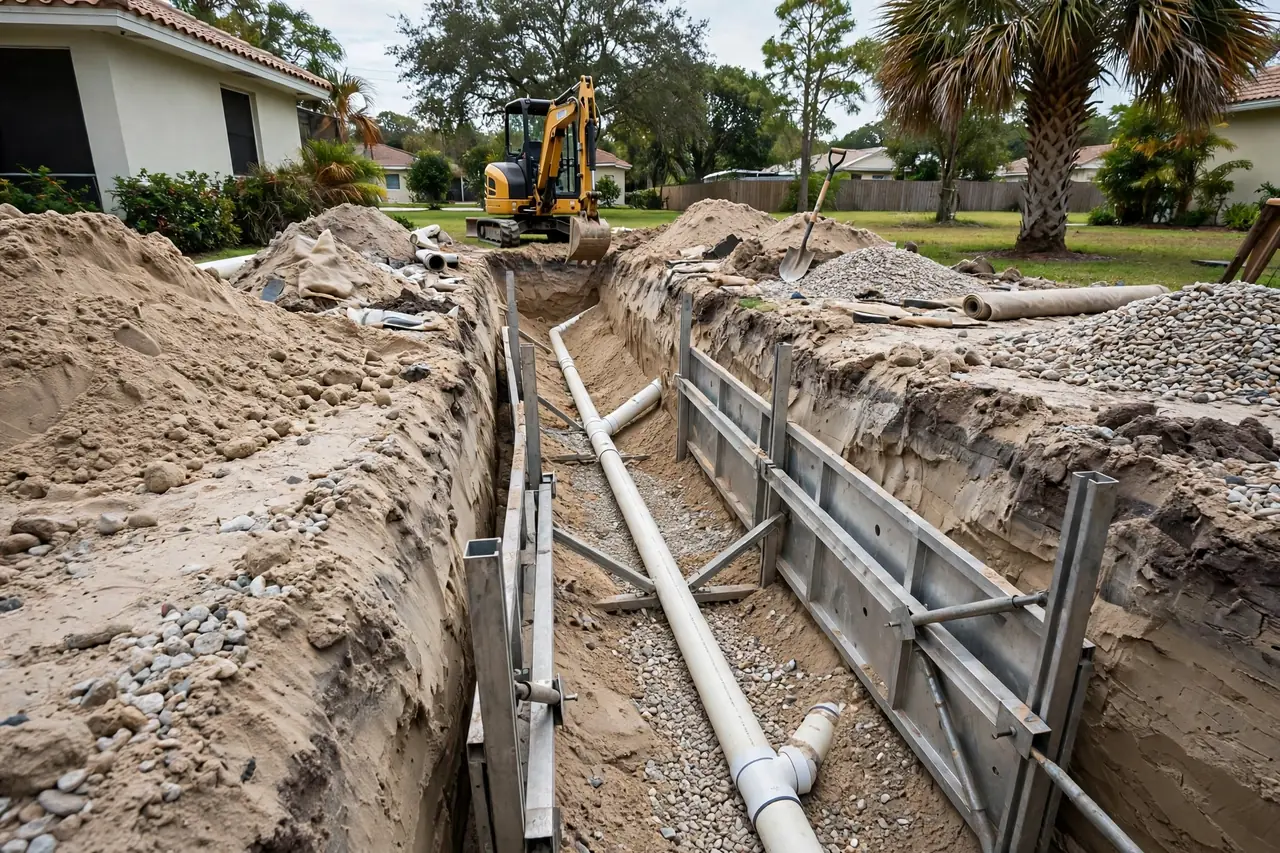
Sewer Line Replacement
Sewer line replacement in Sarasota, FL by excavation when trenchless won't work: proper grade, modern PVC pipe…
Learn more →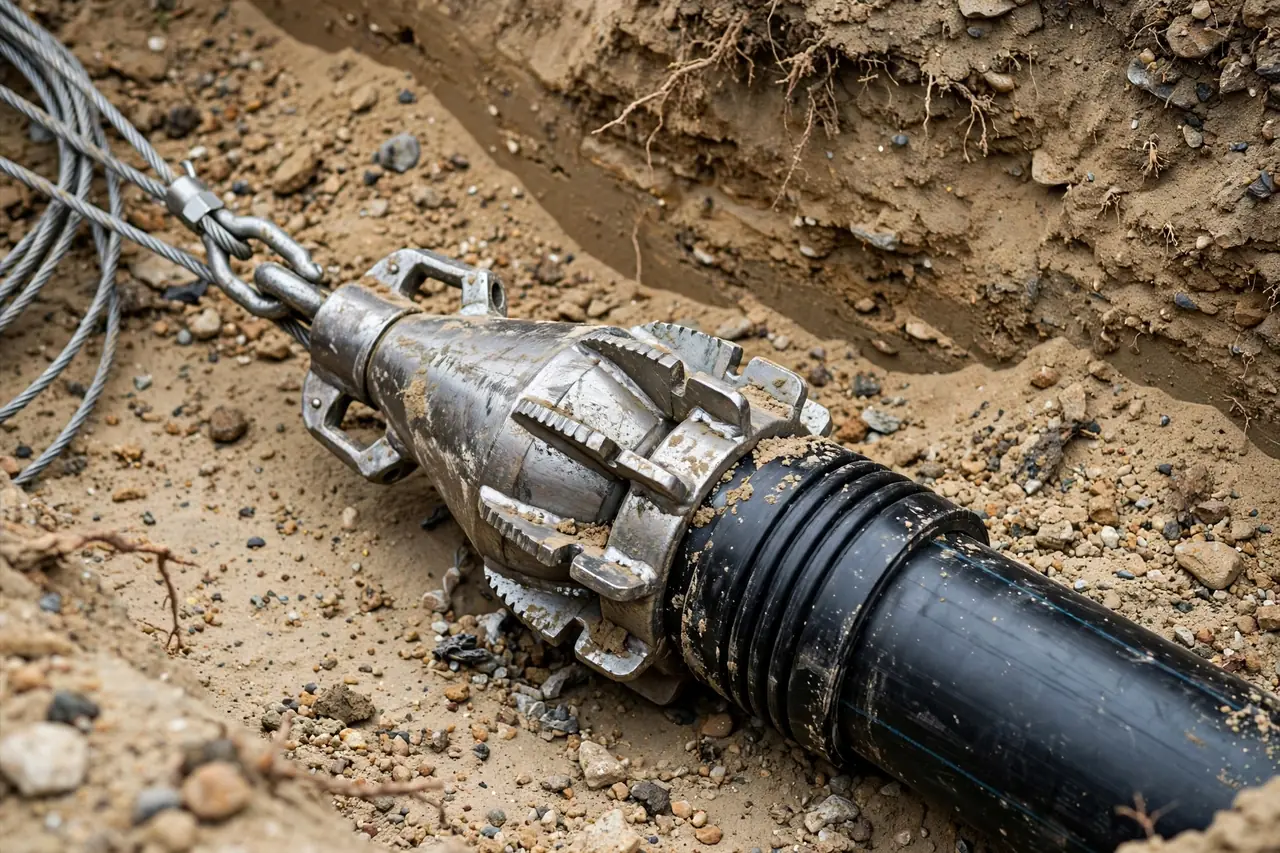
Pipe Bursting
Pipe bursting in Sarasota, FL replaces collapsed sewer lines with minimal digging: new pipe pulled through the…
Learn more →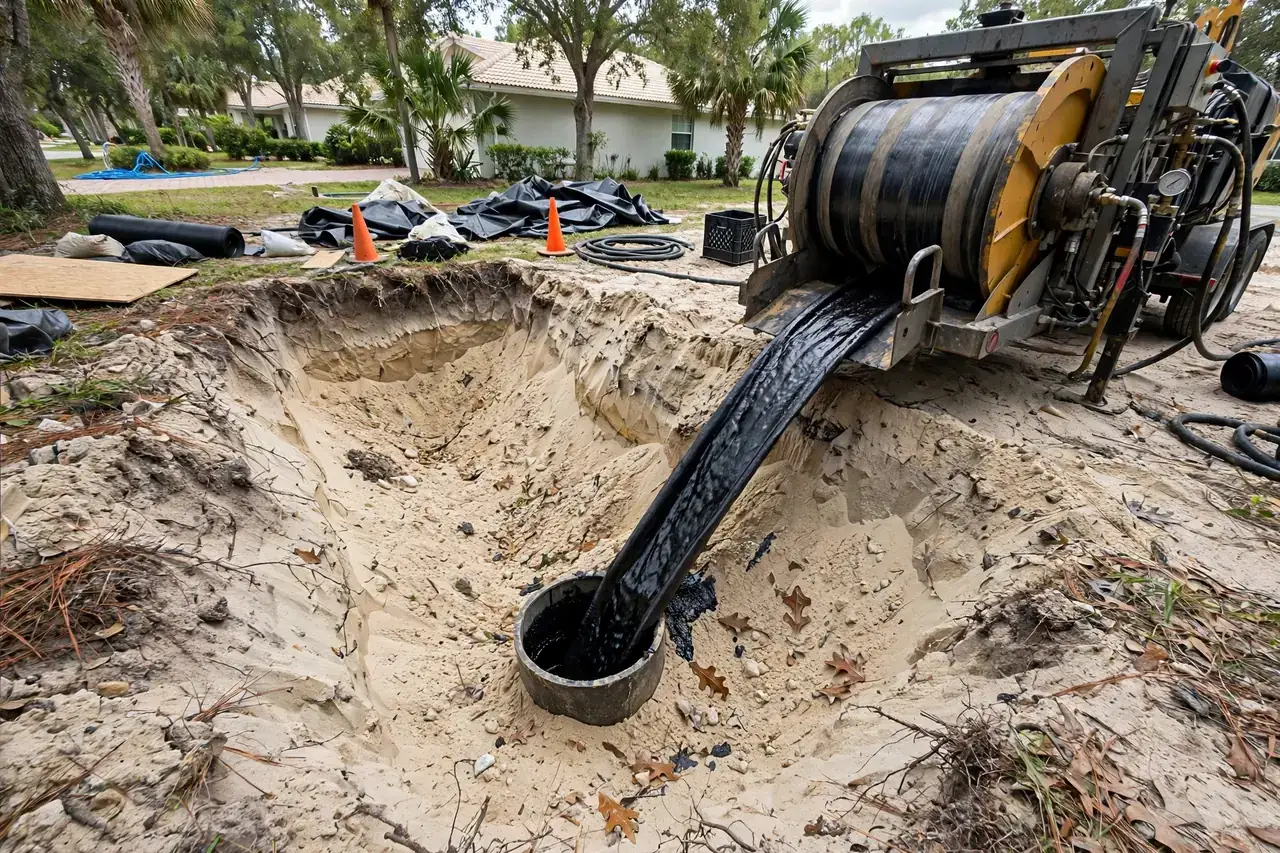
CIPP Pipe Lining
CIPP pipe lining in Sarasota, FL creates a new pipe inside the old one: no trench. Camera inspection, cleaning…
Learn more →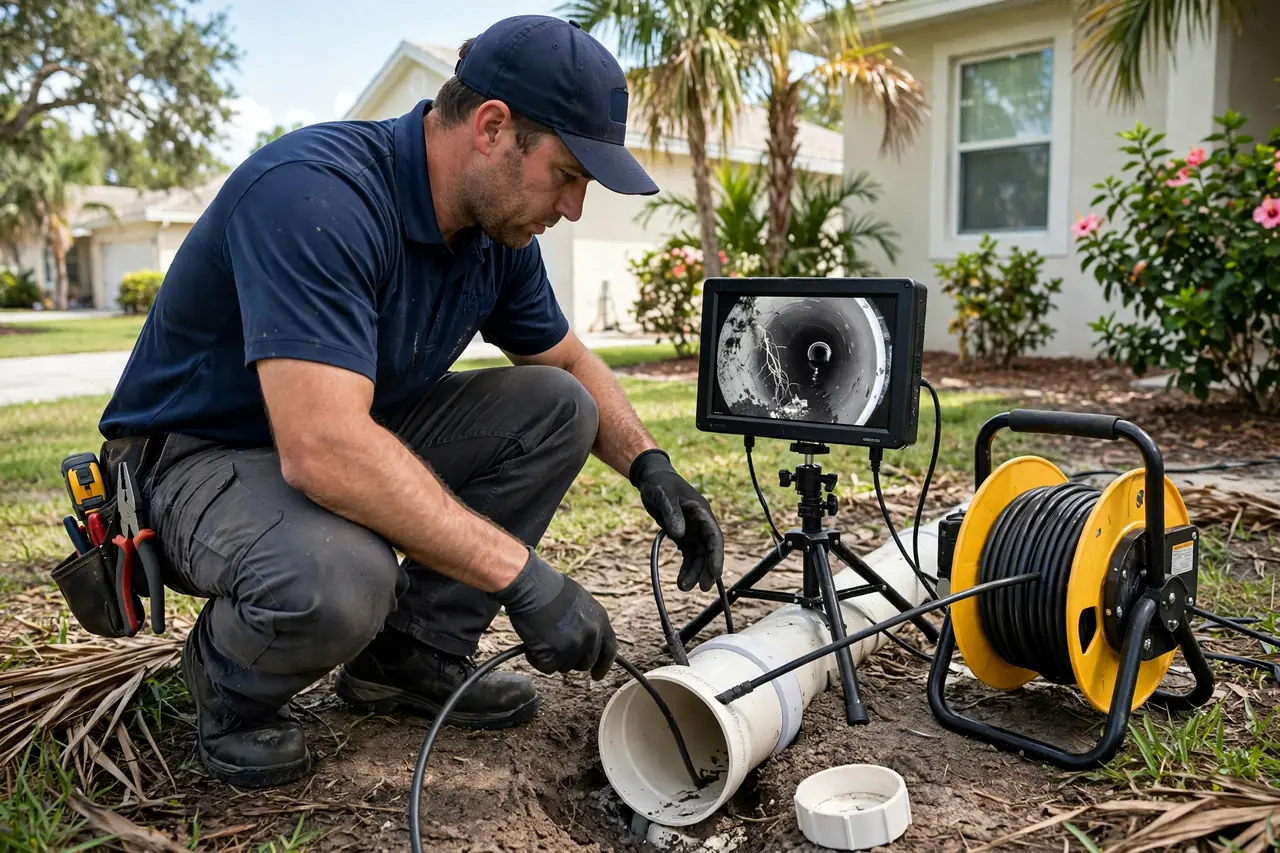
Sewer Camera Inspection
Sewer camera inspection in Sarasota, FL finds roots, scale, bellies & breaks before you dig. HD video diagnosi…
Learn more →
Emergency Sewer Repair
Emergency sewer repair in Sarasota, FL for backups and burst lines. Fast response, camera diagnosis. Call (941…
Learn more →ZIP Codes Served
Local Sewer Guides
Cast-Iron Sewer Pipe in Sarasota Slab Homes: What to Know
Cast-iron sewer pipe under Sarasota slab homes from the 1960s to 1980s is corroding. Learn the signs and repai…
Learn more →7 Signs Your Sewer Line Is Failing (Sarasota Edition)
Seven signs your Sarasota sewer line is failing: slow drains, gurgling, odors, and backups. Call (941) 344-008…
Learn more →Frequently Asked Questions
Is Gulf Gate part of Sarasota's cast-iron-under-slab problem?
Yes, Gulf Gate is the textbook example. Its 1960s to 70s homes were built on slab foundations with cast-iron drain lines beneath the concrete, and the buried yard laterals of the same era are cast iron or clay tile. This combination is the prime failure cohort across Sarasota County.
How does cast iron fail under a slab?
Cast iron under a slab fails from the inside: internal corrosion roughens the pipe wall, scale builds up and narrows the bore, and pitting eventually opens holes. Warning signs include chronic slow drains, frequent toilet clogs, gurgling, and sewage odors, especially if more than one fixture is affected at once.
Who owns the sewer line under my Gulf Gate home?
The main is in the street; the lateral from the house to the main is the homeowner's responsibility. Under-slab drain lines are also the homeowner's. The only shared portion is the connection at the municipal main itself.
Does sewer repair mean tearing up my whole floor?
Breakouts are done selectively, typically a narrow trench through the slab directly over the failed run, not the whole floor. Trenchless methods like pipe bursting can sometimes avoid the slab entirely by replacing the line from outside access points. The camera footage determines which approach fits.
Why do all my drains slow down at the same time?
That pattern points to the lateral or the under-slab drain lines, not the fixtures. One clogged toilet is a fixture problem; simultaneous problems across multiple fixtures mean the shared downstream pipe is restricted. Schedule a camera inspection before the restriction becomes a full backup.
Could my home have cast iron under the slab and clay in the yard?
Many Gulf Gate homes have both. The under-slab DWV lines are cast iron from original construction, and the buried lateral from the house to the street is also typically cast iron or clay tile of the same era. A full camera inspection covers both runs so the whole system is assessed, not just half of it.
Should I have my line inspected before it fails?
Cast-iron DWV under slab does not age gracefully, and the rainy season from June through September accelerates joint separation and infiltration in the buried portions. If the home has never had a camera inspection, now is the right time, waiting for a backup means waiting for the worst moment to pay for the fix.