Barrier-Island Sewer Challenges: Siesta Key & Longboat Key
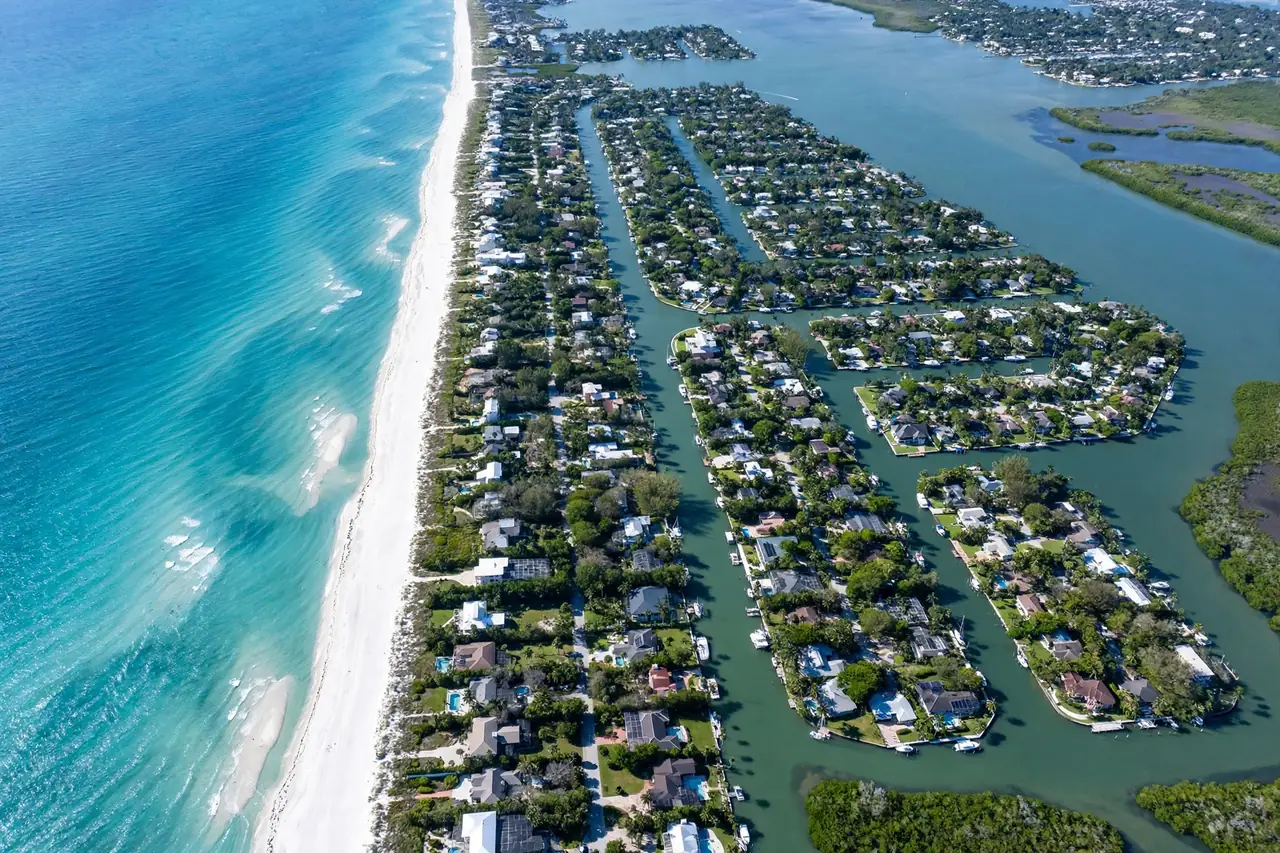
Siesta Key and Longboat Key sit on sand over a water table that barely clears the surface. Storm surge, shifting sand, and aging laterals make island sewer lines fail on a different schedule than the mainland's.
The Water Table Is the Whole Story
Start with the number that explains everything about island sewers: Sarasota County's seasonally high water table runs 0 to 3.5 feet, and on barrier islands it runs toward the low end of that range, shallow, tidally influenced, and easily pushed to the surface. A sewer lateral on Siesta Key or Longboat Key is not buried deep underground in the mainland sense. It is a pipe laid in sand that spends half the year within a few feet of groundwater, and the other half within a few feet of saltwater-influenced groundwater.
That shallow water table does three things to a sewer line. First, it infiltrates: every crack, separated joint, and porous clay joint in the lateral becomes an inlet for groundwater, and the line that should carry only your wastewater carries the island's water table too. Second, it floats the problem: saturated sand loses the support that keeps pipe sections aligned, so bellies form, joints separate, and sections shift. Third, it corrodes: cast-iron laterals in constantly wet, sometimes brackish conditions corrode from the outside in, on top of the internal scale they were already growing.
Why the Islands Differ From the Mainland
Mainland Sarasota neighborhoods, Gulf Gate, Bee Ridge, the historic core, share the same pipe materials and housing eras, but their laterals sit in soil with at least some depth to it. On the keys, everything is compressed: the water table is higher, the sand is looser, the flooding is more frequent, and there is nowhere for water to go but sideways. A lateral that would last another decade on the mainland can fail in half that time on the island, simply because the ground never gives it a dry season.
Storm Surge: Ian, Helene, Milton, and the Flooding They Left Behind
The recent storm history is the second half of the island story. Irma in 2017 was the warning; Ian in 2022 was the catastrophe; Debby in August 2024 brought inland flooding; and Helene and Milton in 2024 hit the barrier islands directly. Siesta Key and Longboat Key flood repeatedly, surge comes over the keys, sits on them, and drains slowly through sand that was already saturated.
Surge damages sewer lines in ways that are invisible from the surface. Floodwater drives sand into cracked laterals and around separated joints, sand infiltration that narrows the pipe from the outside in and grinds against pipe walls with every subsequent flow. The surge shifts the loose island sand that supports the pipes, opening joints that were hairline cracks before the storm. And after the water recedes, the water table stays elevated for weeks, so infiltration through the newly widened cracks continues long after the streets are dry.
The Storm-Season Inspection Habit
Homeowners on the keys have learned to inspect roofs after hurricane season. The lateral deserves the same habit. A sewer camera inspection after a major storm season shows exactly what the surge did to your pipe, sand buildup, newly separated joints, infiltration points, before those problems become backups. After Helene and Milton, this is not theoretical advice. It is maintenance.
Debby's Lesson for Inland Island Drainage
Debby in August 2024 flooded inland areas including Bee Ridge, a reminder that island laterals are not the only ones at surge-level risk, but the keys take the double hit of surge from the Gulf and rainfall with nowhere to drain. After any storm that floods the streets, assume your lateral took on water and sand, and schedule the camera before the next storm season compounds the damage.
Sand Infiltration: The Island-Specific Failure Mode
Every sewer guide mentions root intrusion. Almost none mention sand infiltration, because almost nowhere else has Sarasota's combination of loose fine sand and a near-surface water table. On the keys, sand enters laterals through cracks and separated joints whenever the water table or a storm pushes it in, and once inside, sand behaves badly.
Sand settles. Unlike organic debris, it does not break down or flush through, it accumulates in bellies and low sections, building a bed that narrows the pipe from the bottom up. Sand abrades: every flush drags the settled bed against the pipe walls, wearing clay and cast iron from the inside. And sand returns: clearing sand from a lateral without repairing the entry crack is a temporary fix, because the next high-water event pushes a fresh load through the same opening. Hydro jetting removes sand thoroughly, but the lasting fix is sealing or replacing the cracked section so the sand cannot re-enter.
Siesta Key's Quartz Sand Is Not Your Friend Here
Siesta Key Beach is famous for its quartz sand, cool, white, beautiful. That same quartz is hard and angular, which makes it an excellent abrasive inside a pipe. The beach sand homeowners love and the pipe sand technicians curse are the same material. Keeping it out of the lateral is one more reason to keep island pipes sealed.
Septic Pockets on the Keys
Not every key property is on central sewer. Septic pockets persist on both Siesta Key and Longboat Key, and their drainfields face the cruelest version of the county's water-table math. A drainfield needs unsaturated soil below it to treat effluent; on the islands, unsaturated soil is a seasonal rumor. During the June to September rainy season, the water table can sit at or above the drainfield, and the system stops treating and starts ponding.
Florida's 2030 septic deadline and Sarasota County's conversion program are the forces moving these parcels. For key homeowners still on septic, the county's timeline is the planning document that matters, and the private lateral from the house will be part of the connection regardless of who builds the main. Evaluating that lateral now, while conversion is still on the horizon, is the move that prevents a last-minute scramble. Our septic-to-sewer conversion page covers what the private side of conversion involves.
Tidal Influence on Drainfields
Island drainfields do not just respond to rain; they respond to tides and surge. A king tide can lift the water table under a drainfield the way a rainstorm does, and a surge event can saturate it for weeks. Homeowners who notice their septic system struggling in step with the tides are observing the island's hydrology firsthand, and it is one more argument for conversion on the county's schedule rather than the drainfield's.
What Island Homeowners Should Actually Do
The island playbook differs from the mainland's in emphasis, not in kind. First, inspect after storms: a camera inspection following hurricane season is the highest-value maintenance an island homeowner can buy, because surge damage is invisible until it is expensive. Second, treat sand as a symptom: if jetting pulls sand out of your lateral, the question is not whether to clean it but where the sand entered, and the answer is a crack or separated joint that needs repair.
Third, know your septic status: if you are in a septic pocket, learn your conversion timeline now, because the 2030 deadline is a planning horizon, not a distant rumor. Fourth, choose contractors who understand the water table: trenchless repairs on the keys have to account for saturated sand and shallow groundwater, and a contractor who treats an island lateral like a mainland one is guessing. Siesta Key and Longboat Key each have their own neighborhood page with the local specifics.
Document the Pipe Before You Need the Documentation
One more habit worth building: keep the camera footage. A recorded inspection of your lateral, dated before hurricane season, is proof of the pipe's condition, useful if a storm later causes damage and you need to show what changed. Contractors keep footage on file; ask for a copy and store it with your other home records. It costs nothing extra and it turns a future dispute about pre-existing damage into a settled question.
When It Cannot Wait
Surge season does not respect business hours. A backup during or after a storm, sewage where it should never be, is an emergency sewer repair situation, not a next-week appointment. Island homeowners should have a sewer contractor's number the way they have a roofer's: before the storm, not after. Call (941) 344-0088.
Published 2026-10-09 · Sarasota Sewer Specialists
Related Sewer Services
Sewer Line Replacement
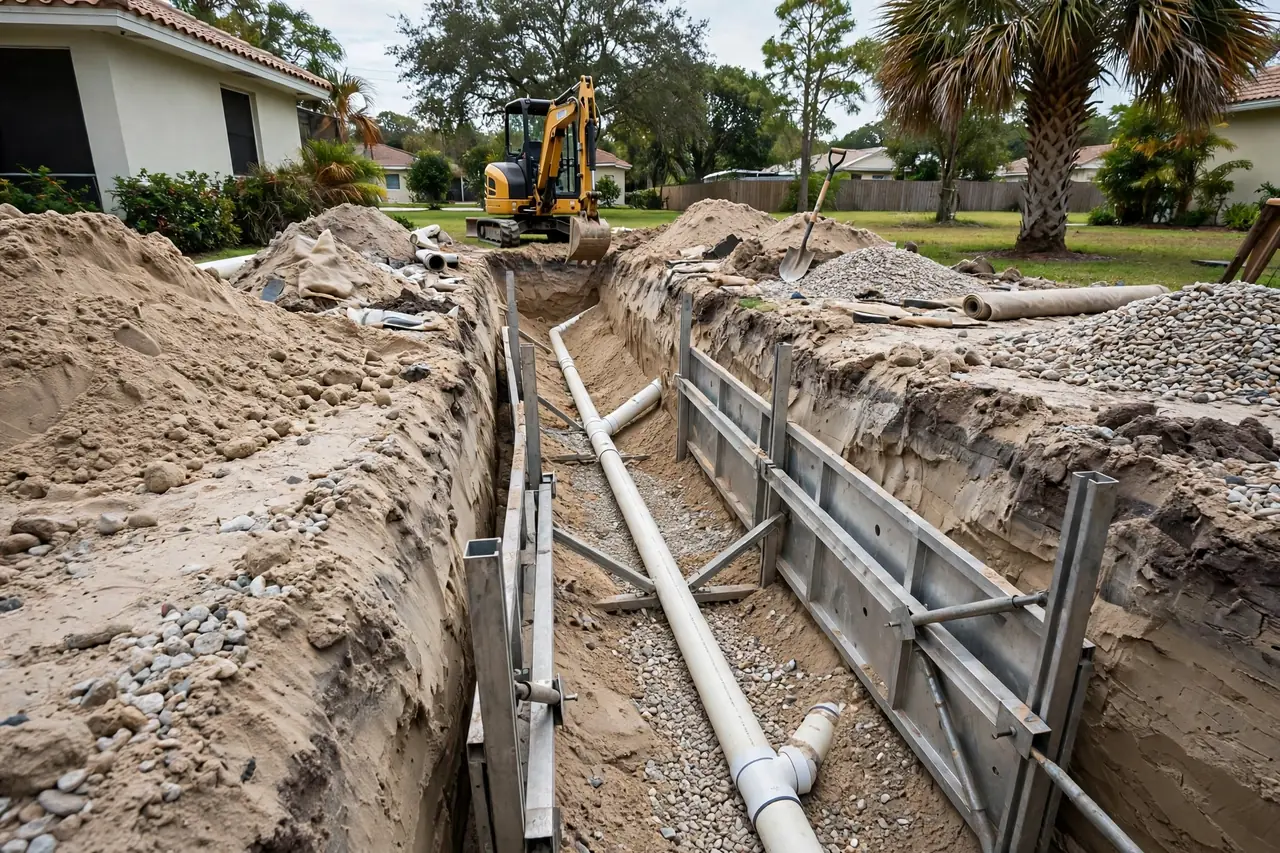
Sewer line replacement in Sarasota, FL by excavation when trenchless won't work: proper grade, modern PVC pipe…
Learn more →
Emergency Sewer Repair
Emergency sewer repair in Sarasota, FL for backups and burst lines. Fast response, camera diagnosis. Call (941…
Learn more →Nearby Service Areas
Frequently Asked Questions
Does everything in this post apply to all of Sarasota?
Only where the barrier-island conditions are the failure driver, high water table, surge flooding, sand infiltration, and septic pockets. Inland Sarasota neighborhoods with the same housing era have the same pipe materials but very different water exposure. The keys fail differently, which is why they get their own page.
How does a storm surge damage a sewer line that is buried underground?
Surge flooding drives saltwater and sand into cracked laterals and around pipe joints, and the water table, already seasonally high at 0 to 3.5 feet, stays elevated after a storm. Infiltration continues until the ground drains, and shifted soil can separate joints that were merely cracked before the storm.
Are homes on the keys still on septic systems?
Septic pockets still exist on both keys. Their drainfields face the same water-table math as everywhere in the county, worse, because the islands' water table responds to tides and surge. Sarasota County's septic-to-sewer program and the 2030 state deadline are the forces moving these parcels toward central sewer.
Did the recent hurricanes really damage sewer lines on the keys?
No. Surge flooding overwhelmed sewer infrastructure on barrier islands during recent storms, that is documented history, not speculation. What you can verify is your own property: a camera inspection of your lateral after a major storm season shows exactly what the surge did to your pipe.
What should I ask a contractor before hiring them for key sewer work?
Ask for a camera inspection, ask whether they have worked on barrier-island laterals, and ask how they account for the water table in their repair plan. If the answer to any of those is vague, keep calling. Call (941) 344-0088, we work both keys and the mainland.